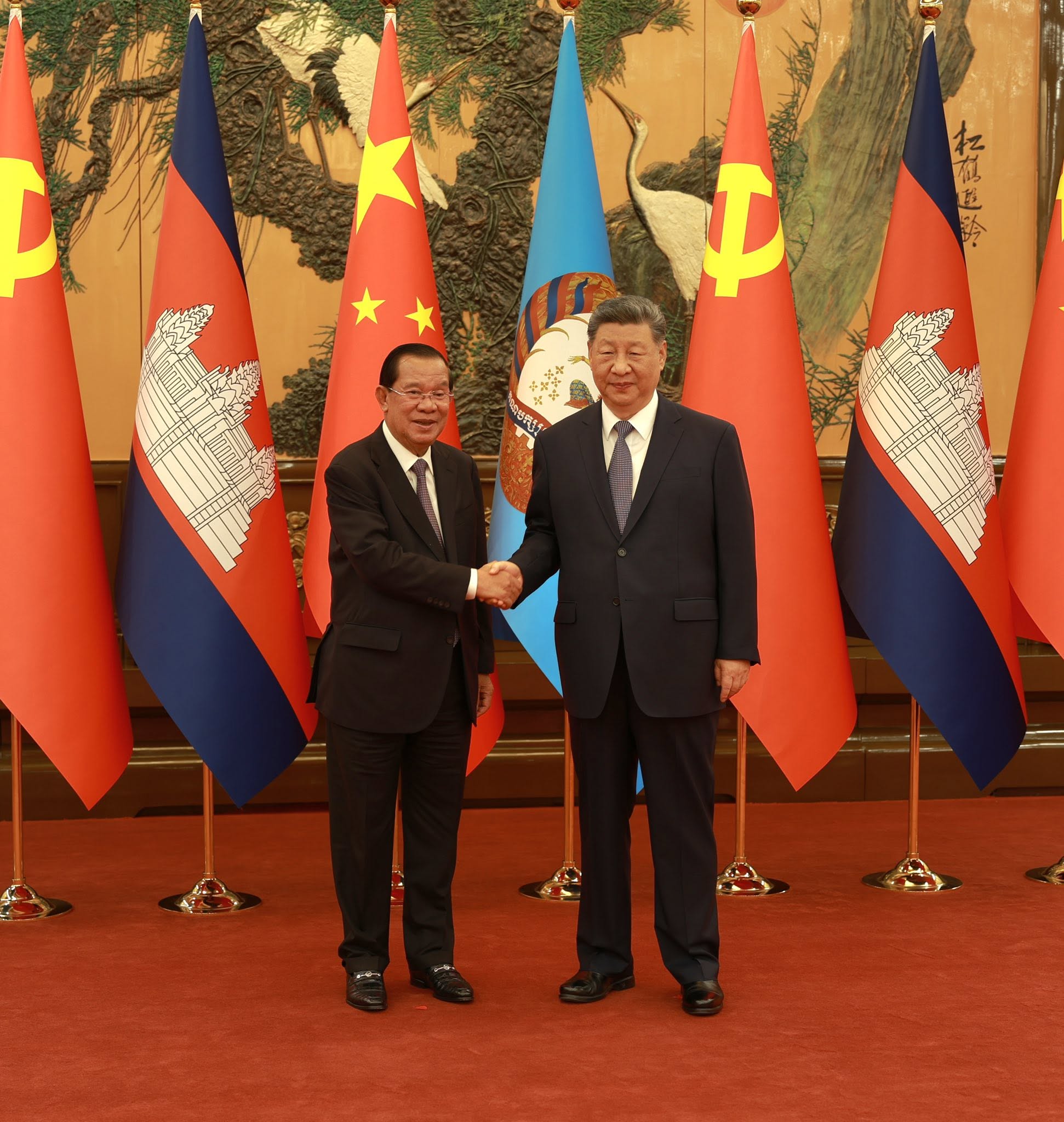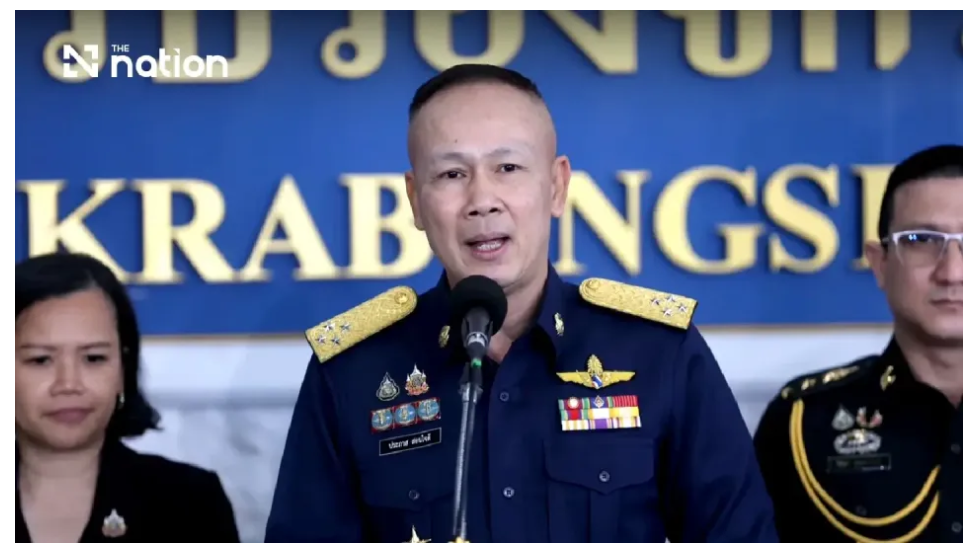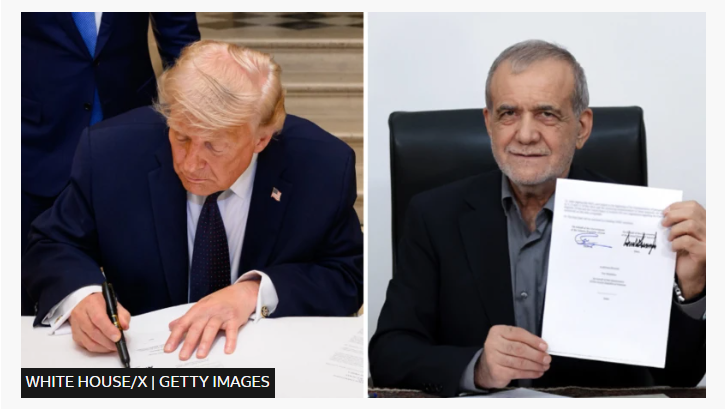
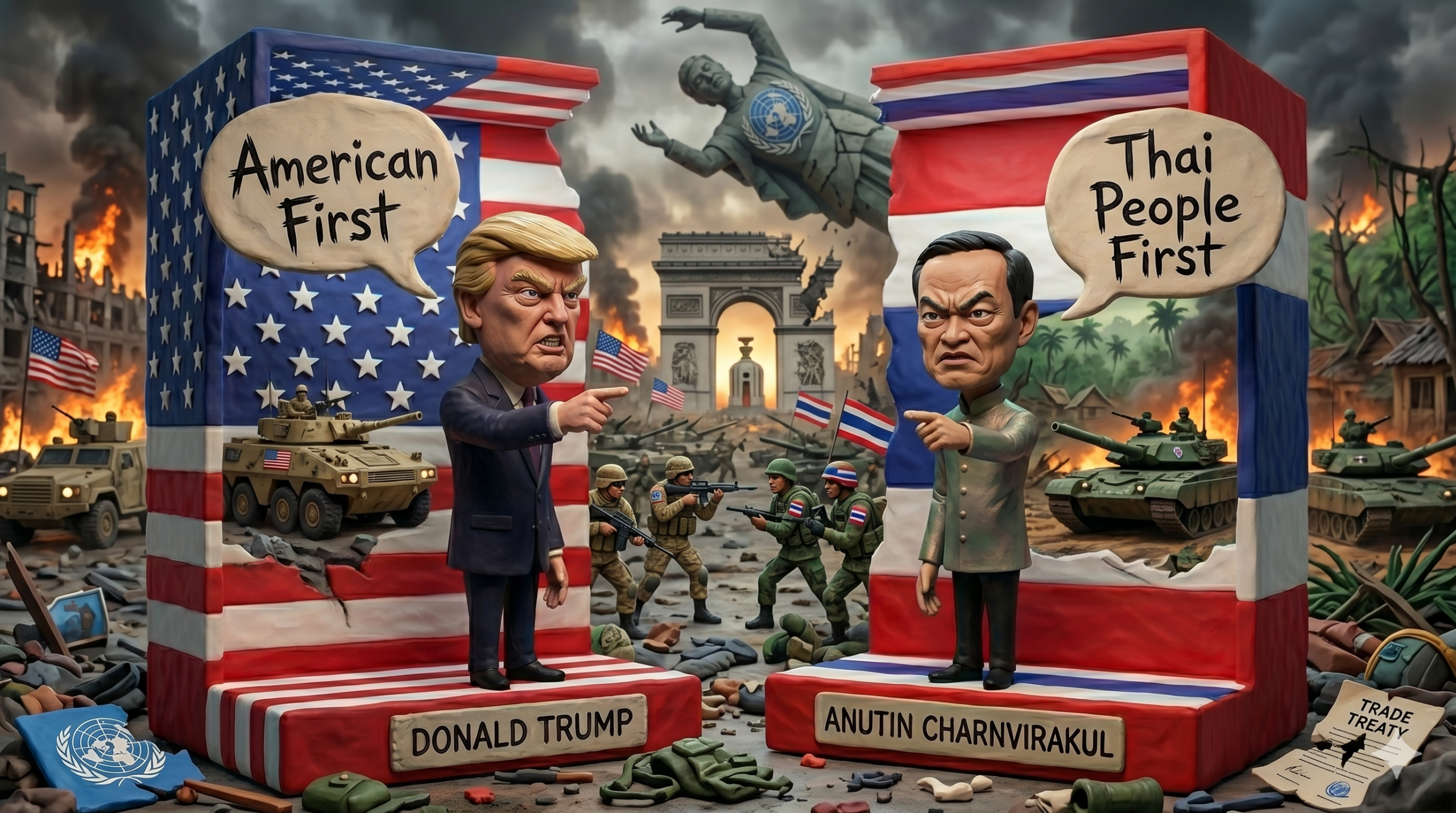
The global political landscape of 2026 is increasingly defined by a seductive but lethal narrative: the “First” doctrine. Whether it is the resurgent “America First” policy in Washington or the populist “Thai People First” agenda in Bangkok, these slogans share a common DNA—the elevation of national ego above collective survival. While marketed as a return to sovereignty and domestic prosperity, the reality is far more fractured. When ego becomes the primary driver of statecraft, the result is not strength, but a systematic dismantling of the peace and stability required for a functioning world.
The tragedy of this paradigm is most visible in the regions caught in the crossfire of these “First” ideologies. For Cambodia, a nation that has spent decades rebuilding its social fabric and securing its land rights, the resurgence of aggressive nationalism among its powerful neighbors represents a clear and present danger. The recent border skirmishes of 2025, fueled by nationalist rhetoric and territorial disputes, serve as a grim preview of what happens when selfishness is institutionalized as a governing principle.
The Psychology of “First”: Ego as a Political Weapon
At its core, the “First” doctrine is an expression of collective narcissism. It operates on the fallacy that a nation can thrive in isolation or by actively undermining its neighbors. In the context of “America First,” we see a superpower retreating from multilateralism, treating international law not as a shared safeguard, but as an inconvenience to be bypassed. This shift signals to the rest of the world that cooperation is dead and that only raw power matters.
Similarly, the “Thai People First” rhetoric, while focusing on internal economic restructuring and security, often weaponizes historical grievances to distract from domestic political fissures. When political leaders use national ego to bolster their popularity, they create a “zero-sum” environment. In this environment, a gain for one’s neighbor is perceived as a loss for oneself. This mindset turns partners into adversaries and borders into battlefields.
“America First”: A Case Study in Global Fragmentation
The return of the Trump administration in 2025 brought with it a renewed emphasis on transactional diplomacy. The “America First” strategy of 2026 is not merely about domestic focus; it is about an interventionism that serves narrow, short-term interests at the expense of global norms.
From an analytical perspective, the “America First” approach fails because it ignores the interconnected nature of modern threats. Whether it is climate change, narcotics trafficking, or regional conflict, no nation can “firewall” itself from the consequences of global instability. By dismantling the very institutions designed to manage these crises, the “First” doctrine ensures that when disaster strikes, there is no collective mechanism left to respond.
The US intervention in the Thai-Cambodian border conflict in late 2025 illustrates this transactional nature. While a ceasefire was brokered, it was linked strictly to bilateral tariff negotiations rather than a genuine commitment to regional peace. This “peace-for-trade” model is fragile; it lasts only as long as the immediate economic benefit remains, leaving the underlying causes of the conflict to fester.
“Thai People First” and the Threat to ASEAN Solidarity
In Southeast Asia, the rise of “Thai People First” has created a similar rift. Under the leadership of Prime Minister Anutin Charnvirakul, the rhetoric has shifted toward a more assertive stance on border security and national interest. While the official policy emphasizes peaceful resolution, the reality on the ground in 2025 told a different story.
The armed clashes along the Cambodian border—characterized by airstrikes and drone attacks—were the direct result of nationalist rhetoric being used to fuel political polarization. When “First” becomes the rallying cry, diplomacy is viewed as weakness. For Cambodia, this means facing a neighbor that is increasingly willing to use its military superiority to settle territorial disputes that have already been adjudicated by international bodies.
The Cambodian Experience: Sovereignty Under the Shadow of Giants
For a country like Cambodia, the “First” doctrine of its neighbors is not just a political slogan; it is an existential threat. The nation has worked tirelessly to establish a framework for land rights and community development, often supported by international NGOs and regional cooperation. However, when “America First” or “Thai People First” becomes the dominant ideology, these frameworks are the first to be sacrificed.
The 2025 conflict impacted not just military facilities but the lives of thousands of civilians. For those working in land rights advocacy and community monitoring, the “First” doctrine represents a reversal of progress. It creates an environment where humanitarian assistance is used as a bargaining chip and where the rights of the most vulnerable are secondary to the egos of national leaders.
The fundamental flaw in the “First” philosophy is the “Silo Effect.” In a world where supply chains, ecosystems, and digital networks are inextricably linked, a siloed approach to governance is a recipe for obsolescence. Selfishness at the state level acts as a friction that slows down every global solution. It creates a world that is “brittle”—prone to sudden, violent collapses rather than gradual, managed changes.
The Human Cost: Beyond Rhetoric
Behind the grand speeches about “inherent greatness” and “national pride” lies a cold reality of human suffering. When leaders prioritize their own political ego, they effectively declare war on the future. The resources spent on airstrikes and border barriers are resources taken away from education, healthcare, and climate adaptation.
The destruction of the world does not always require a nuclear winter; it can happen through the steady accumulation of selfish acts. It happens when a superpower decides that a trade deal is worth more than a neighbor’s peace. It happens when a regional leader decides that a few meters of disputed soil are worth more than the lives of the people living on it.
A Call for Collective Resilience
The “First” doctrine is a relic of an era we can no longer afford to inhabit. The challenges of 2026—be they geopolitical, environmental, or economic—require a level of cooperation that is incompatible with nationalistic ego. To survive, the global community must move toward a model of Collective Resilience.
This shift requires a fundamental re-evaluation of what it means to be a “leader” in the 21st century. True leadership is not about putting one’s own people “first” at the expense of others; it is about recognizing that “first” is an impossible position in a circle. We are all linked, and the destruction we visit upon our neighbors will inevitably find its way back to our own doorstep.
For those on the front lines of advocacy and development, the path forward is clear: we must continue to build the networks of cooperation that the “First” doctrine seeks to destroy. We must champion the rights of communities over the whims of states and prioritize the shared reality of our planet over the fractured ego of our politics. Only then can we hope to build a world that is not only “first” in name but also enduring in spirit.