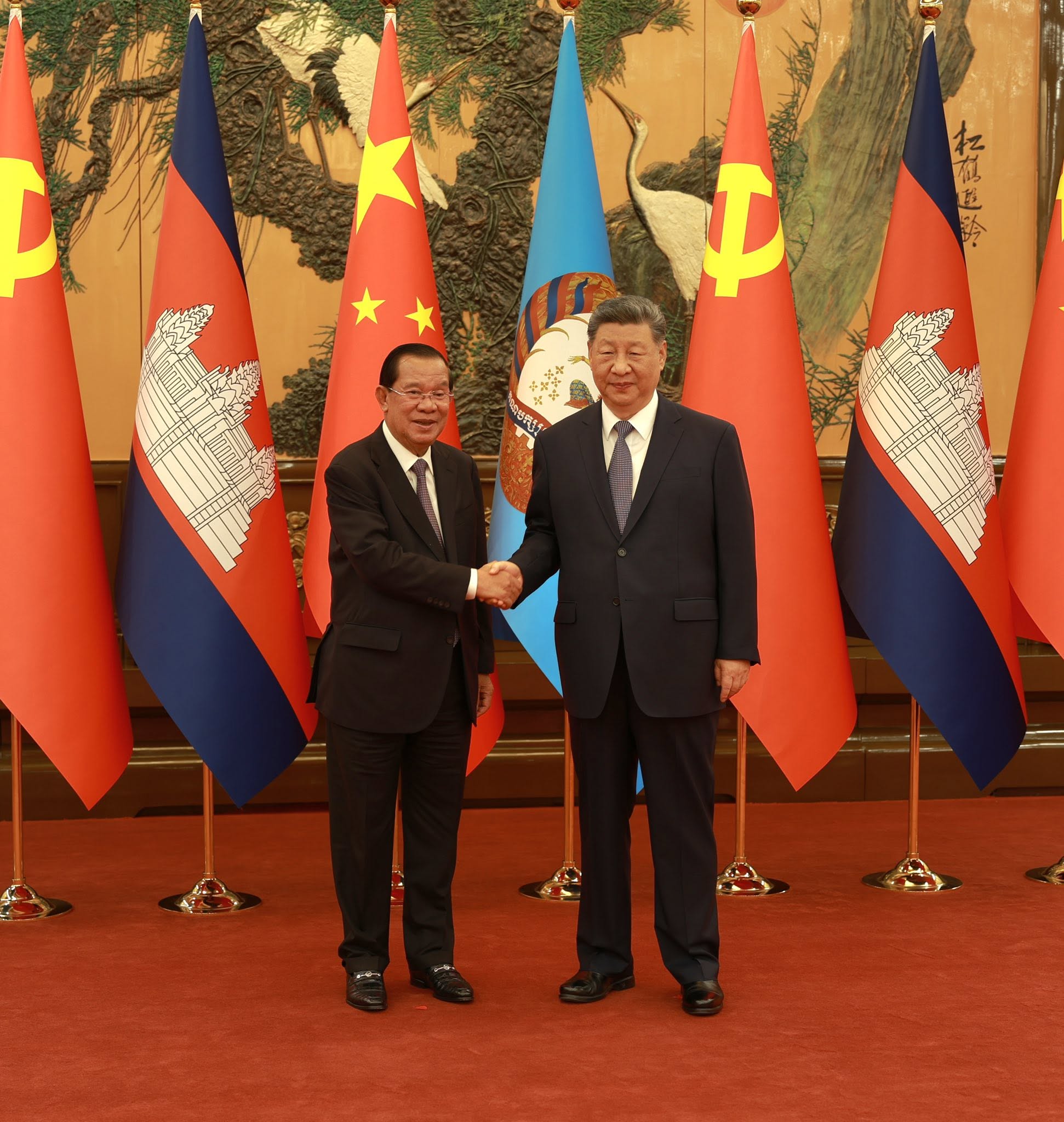
The concern among Thai ultra-nationalist circles regarding Samdech Techo Hun Sen’s diplomatic visits to China is rooted in a complex intersection of historical border tensions, regional geopolitical rivalry, and the perception of China’s role as a “kingmaker” in Southeast Asian security.
For many Thai ultra-nationalists, Cambodia’s deepening reliance on China is viewed not just as a bilateral partnership, but as a strategic threat to Thai national interests. Below is an analysis of why these visits frequently provoke such intense reactions.
1. The “Arms Race” and Military Parity
A primary source of friction is the military cooperation between Phnom Penh and Beijing. Recent instances—such as China’s delivery of main battle tanks and other equipment to the Royal Cambodian Armed Forces—have been met with significant hostility by Thai nationalist commentators.
- Perception of Betrayal: Many in Thailand view the “Thai-Chinese brotherhood” as a cornerstone of their foreign policy. When China provides significant military support to Cambodia—a nation with which Thailand has had active, and occasionally violent, border disputes—it is often interpreted by Thai nationalists as a betrayal by a supposed “sibling” nation.
- Shift in Regional Balance: Thai security analysts and nationalists fear that as Cambodia modernizes its military with Chinese hardware, the traditional power asymmetry that favored Thailand is eroding, potentially emboldening Cambodia in future border negotiations or standoffs.
2. Deepening “Ironclad” Ties Amid Border Friction
The terminology used to describe the China-Cambodia relationship—such as “ironclad friendship” or “community with a shared future”—is often seen by Thai nationalists as a signal that Beijing has firmly “picked a side.”
- Sovereignty Fears: Because these meetings frequently involve high-level discussions on security and sovereignty, Thai hardliners often interpret these statements of support for Cambodia as an indirect challenge to Thailand’s own claims.
- Mediation Skepticism: While China often frames itself as a neutral mediator in regional disputes, Thai nationalists frequently view Beijing’s diplomatic rhetoric as favoring Cambodia. When China expresses “unwavering support” for Cambodia’s development and security, it reinforces the narrative among Thai ultranationalists that Beijing is acting as a backer for their regional rival.
3. Geopolitical Alignment and “Client State” Concerns
There is a prevailing sentiment in certain Thai political circles that Cambodia has moved toward becoming a “client state” of China.
- The “Proxy” Narrative: Thai nationalists worry that Cambodia acts as a proxy for Chinese interests in the Mekong sub-region. Consequently, every high-level visit by a figure as influential as Samdech Techo Hun Sen to Beijing is scrutinized for potential “agendas” that could undermine Thai diplomatic or economic influence in the region.
- Regional Rivalry: Given the competition between major global powers, some Thai observers perceive that Beijing uses its influence in Cambodia to gain leverage over the broader ASEAN region, further fueling anxiety among those who believe Thailand’s strategic autonomy is being squeezed by Chinese-aligned neighbors.
4. Domestic Political Optics
In Thailand, nationalist sentiment is often used as a tool in domestic politics.
- Feeding the Narrative: Prominent figures and media outlets that tap into ultra-nationalist fervor often use these high-profile visits to galvanize domestic support by painting the government as “weak” or “betrayed” by foreign powers.
- Social Media Amplification: As seen in recent years, the digital space—ranging from Facebook posts to viral videos—serves as a battleground where these anxieties are amplified, often leading to public outcry that puts pressure on the Thai government to take a harder stance against Cambodia to satisfy the nationalist base.
Conclusion: The Perception Gap
The disconnect largely stems from differing views of international relations. While Cambodian leadership views its partnership with China as a pragmatic necessity for economic and national development, Thai ultra-nationalists often view regional dynamics through a zero-sum lens. In this worldview, any gain in influence or military capacity by Cambodia, facilitated by China, is automatically perceived as a direct loss or threat to the security and historical standing of Thailand.
Do you believe that the deepening “ironclad” relationship between Cambodia and China is primarily driven by economic necessity, or is it a calculated move to shift the regional security balance?