The diplomatic theater playing out between Phnom Penh and Bangkok has crossed an unacceptable line. Following the devastating armed border clashes of mid-to-late 2025—which displaced nearly half a million civilians and brought unprovoked F-16 airstrikes onto Cambodian soil—Thailand is now attempting to wage a quiet, coercive war in the halls of global diplomacy.
The recent warnings from Thai Deputy Prime Minister and Foreign Minister Sihasak Phuangketkeow are as transparent as they are alarming. Bangkok has openly pressured Cambodia to stop raising bilateral disputes at international forums, specifically targeting Cambodia’s remarks at the United Nations Security Council (UNSC) and its legitimate push for compulsory conciliation under the United Nations Convention on the Law of the Sea (UNCLOS).
This is not diplomacy; it is an overt attempt to muzzle a sovereign nation and shield military aggression from global oversight.
The Double Standard of “Bilateral Trust”
Bangkok’s central argument is wrapped in the language of regional stability. Thai officials claim that by bringing the border crisis to the UN stage, Cambodia is violating a mutual understanding to resolve issues through direct dialogue, thereby “undermining trust.”
This rhetoric turns reality on its head. Trust is not destroyed by talking about a conflict at the United Nations; trust was shattered when Thai ground forces crossed the frontier, when heavy artillery struck Cambodian neighborhoods, and when Bangkok unilaterally ripped up the 2001 Memorandum of Understanding (MOU 44) on overlapping maritime claims.
For Thailand to demand that Cambodia keep these issues strictly behind closed doors is a classic bullying tactic. History has repeatedly shown that in purely bilateral negotiations between nations of unequal military or economic weight, the larger power holds all the cards. Bangkok wants Cambodia isolated in a room where international law can be ignored in favor of raw leverage. By internationalizing the dispute, Cambodia is simply leveling the playing field, invoking the exact global mechanisms designed to protect smaller states from regional hegemony.
International Law is a Shield, Not a Weapon
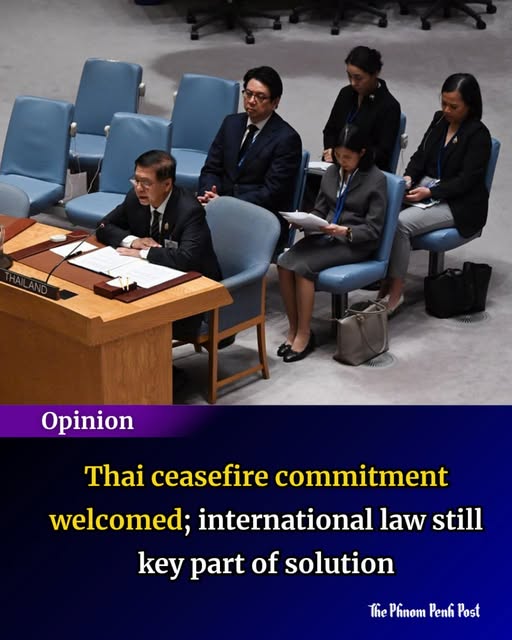
Thailand’s panic over Cambodia’s appeal to UNCLOS and the UNSC reveals a profound discomfort with independent, legal scrutiny. When Cambodia’s permanent representative to the UN, Keo Chhea, detailed the humanitarian impact of the border conflict at the UNSC open debate, he was not “attacking” Thailand—he was stating facts.
Furthermore, Phnom Penh’s invocation of Annex V of UNCLOS for compulsory conciliation is a textbook example of peaceful, rules-based dispute resolution. If Thailand genuinely believes its territorial claims are valid and its actions justified, it should welcome the structured, impartial arbitration of an international panel. Instead, Bangkok has balked, insisting that Cambodia must change course or risk halting all bilateral progress.
This ultimatum is a direct threat to Cambodia’s sovereignty. A nation should never have to choose between bilateral cooperation and its fundamental right to appeal to international justice.
Breaking the Silence
The Dângrêk mountains and the waters of the Gulf of Thailand do not belong to the strongest military force; they are subject to treaties, historical rulings like the 1962 International Court of Justice decision, and international maritime law.
Cambodia must flatly reject Thailand’s demands for silence. Turning a blind eye to territorial encroachment in the name of a fragile, superficial “constructive atmosphere” only invites further aggression. The closed border checkpoints, the economic hardship faced by frontier communities, and the lingering threat of renewed skirmishes are matters of regional security that demand the world’s attention.
The international community, including ASEAN and the UN Security Council, must recognize Thailand’s pressure campaign for what it is: an attempt to normalize coercion and bypass the international rule of law. Phnom Penh must stand firm. True trust cannot be built on a foundation of threats, and peace will only be achieved when borders are defined by law, not dictated by force.