PHNOM PENH – The Royal Government of Cambodia has escalated its diplomatic offensive against what it describes as systematic “Thai aggression,” accusing Bangkok of leveraging border tensions for domestic political gains. In a series of blistering statements this week, Phnom Penh rejected Thai media claims of a negotiation delay and formally protested “unlawful” military constructions, including a permanent fence in Chanthaburi, which Cambodia asserts violates existing international treaties.
The Disinformation War: The “Post-New Year” Fabrications
The latest flare-up began when Thai media, quoting Foreign Minister Sihasak Phuangketkeow, suggested that Prime Minister Hun Manet had agreed to postpone Joint Boundary Commission (JBC) talks until after the Khmer New Year in April.
On Tuesday, Cambodian government spokesperson Pen Bona issued a categorical denial, stating that the Prime Minister never made such remarks. Instead, Bona revealed that Cambodia has already submitted five formal requests to resume technical talks since the December 27, 2025 ceasefire—all of which have reportedly been met with silence or diversionary tactics from the Thai side.
“Thailand is attempting to paint Cambodia as the party delaying peace, while in reality, it is Bangkok that refuses to sit at the table,” a senior Cambodian diplomat told The Diplomat under condition of anonymity. “This is a classic ‘advance-seize-hold’ strategy disguised as a diplomatic misunderstanding.”
Strategic Encroachment: Fences, Containers, and Barbed Wire
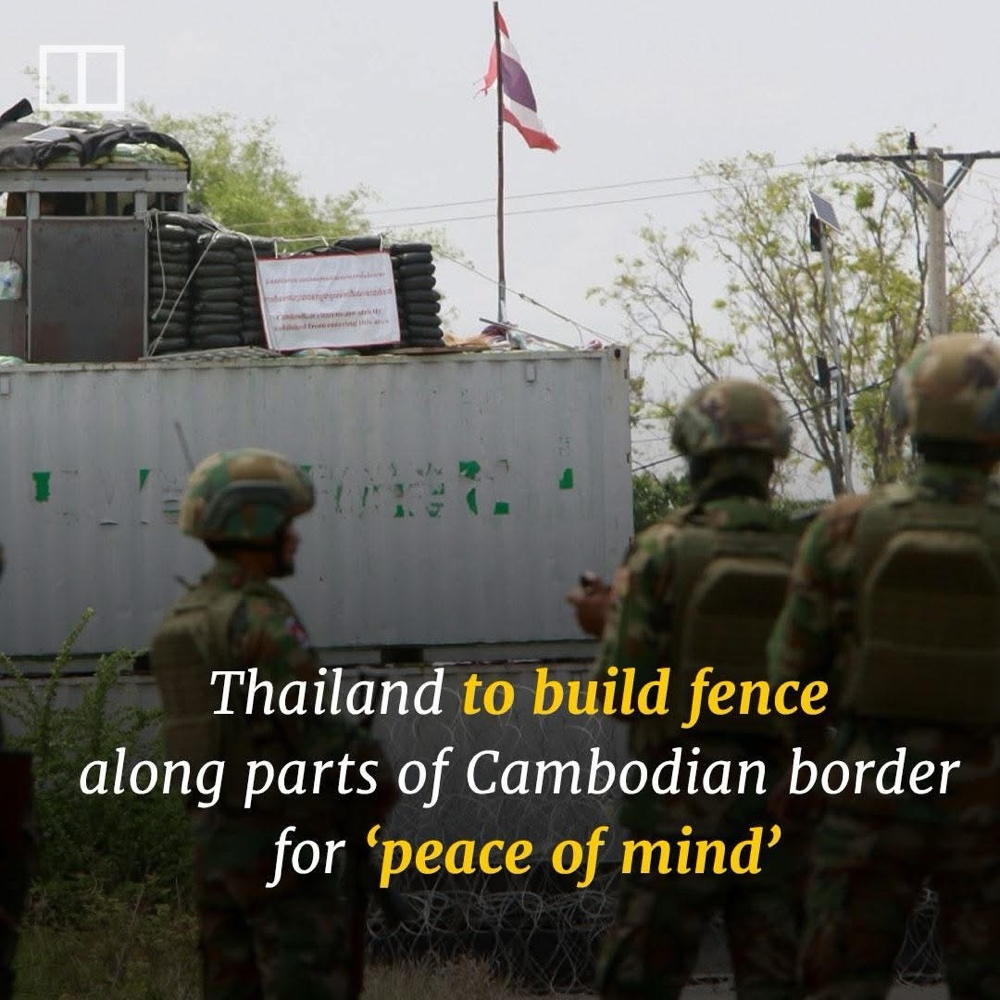
While Bangkok frames its new border fence project as a measure for “peace of mind” and “combating transnational crime,” Phnom Penh views it as a unilateral attempt to alter the status quo. The Royal Thai Armed Forces are scheduled to begin construction of a permanent wall in Chanthaburi this April, a move Cambodia argues is illegal in contested zones.
Further north, the use of shipping containers and barbed wire around Preah Vihear and other flashpoints has drawn formal objections from the Cambodian Ministry of Foreign Affairs. These structures have effectively displaced roughly 80,000 Cambodian civilians, preventing them from accessing their farmland and homes.
Domestic Politics: The Thai Military’s “Gains”
Analysts point to the internal instability in Bangkok as the primary driver of the current aggression. Following the ouster of Prime Minister Paetongtarn Shinawatra in late 2025, the Thai military has aggressively reasserted its role as the “defender of sovereignty” to bolster its standing ahead of the upcoming April elections.
“The Thai military thrives on border friction,” says Dr. Thitinan Pongsudhirak, a regional security expert. “By creating a ‘security crisis’ with Cambodia, the military-royalist establishment can justify a larger budget and a more central role in governance, effectively sidelining civilian leadership.”
A History of Broken Agreements
Cambodia maintains that its claims are grounded in the Franco-Siam Treaties and the 1962 International Court of Justice ruling. However, the Thai side has frequently shifted between accepting these frameworks and using its own unilateral maps to justify military presence.
The 2025 conflict, which saw heavy artillery fire and dozens of civilian deaths, was the bloodiest in over a decade. Since then, the Thai government has reportedly used the “scam center” narrative—accusing Cambodia of harboring digital criminals—as a smoke screen to divert international attention from territorial violations.
The Humanitarian Cost
Beyond the rhetoric, the cost is being paid by border communities. Cross-border trade, valued at over $5 billion, remains frozen. In Cambodia’s northwestern provinces, schools remain closed, and the threat of newly laid landmines continues to claim lives.
Phnom Penh has signaled that it will take these “illegal constructions” back to the United Nations Security Council and the International Court of Justice if Bangkok continues to bypass the JBC framework.
A Multi-Generational Struggle
The current standoff is more than a boundary dispute; it is a test of Prime Minister Hun Manet’s new administration against a resurgent Thai military. By resisting the “post-New Year” narrative, Cambodia is attempting to force the international community to recognize that the delay is not a matter of festive scheduling but a deliberate tactical choice by Thailand to consolidate illegal territorial gains while Bangkok remains in political flux.