The story of Tun Channareth is one of unimaginable trauma transformed into a global crusade for peace. In the early 1980s, near the Thai-Cambodian border, Channareth’s life was forever altered when he stepped on an anti-personnel landmine. The blast shattered both of his legs, leaving him stranded in a remote minefield. In a moment of sheer desperation and agony, he famously attempted to use an axe to sever his own mangled limbs to free himself. He was eventually rescued by a friend, but the injury resulted in the loss of both legs. This personal tragedy did not break his spirit; instead, it became the catalyst for a lifelong mission to ensure no one else would suffer a similar fate.
Channareth became a leading voice for the International Campaign to Ban Landmines (ICBL), a coalition of non-governmental organizations dedicated to a world free of anti-personnel mines. His work involved not only high-level advocacy but also grassroots empowerment. Living in Cambodia with his family, he dedicated himself to designing and building wheelchairs specifically for landmine survivors, helping them regain mobility and dignity. His presence served as a living testament to the human cost of these weapons, providing a face and a voice to the “tens of thousands” of victims globally.
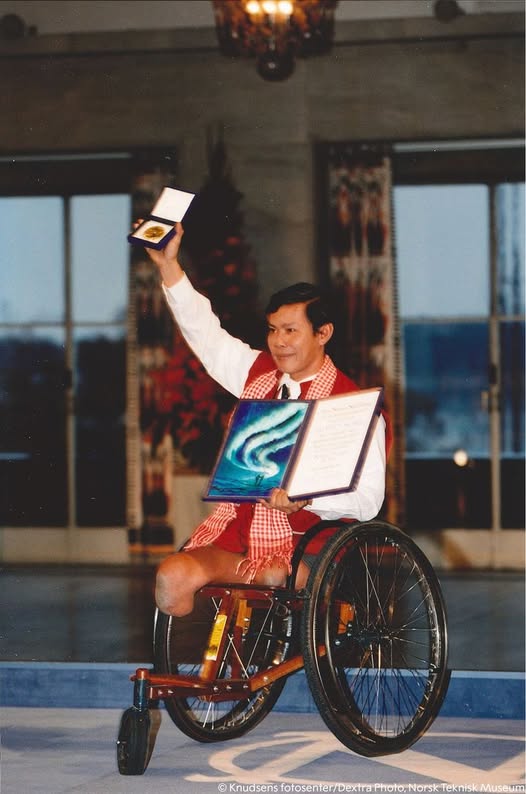
In 1997, the ICBL was awarded the Nobel Peace Prize for its efforts to ban and clear anti-personnel mines. Channareth was chosen to represent the campaign and receive the award in Oslo. During the Nobel Peace Prize lecture, his story was used to illustrate the urgent necessity of the Mine Ban Treaty. Today, Channareth remains a symbol of resilience, continuing his work with disabled children and advocating for the universal adoption of the Ottawa Treaty, which seeks to end the use, stockpiling, production, and transfer of anti-personnel mines.