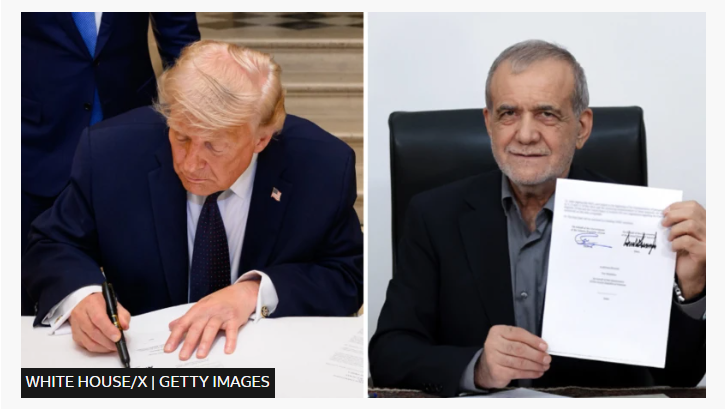
The global community breathed a collective sigh of relief in mid-June 2026 as news broke of a monumental diplomatic breakthrough capable of halting one of the most volatile military conflicts of the twenty-first century. For nearly four grueling months, the threat of an unmitigated third world war loomed large over the Middle East, rattling global energy markets, upending maritime trade, and claiming thousands of lives. However, the trajectory of this devastating conflict shifted decisively when United States President Donald Trump and Iranian President Masoud Pezeshkian formally executed a comprehensive 14-point interim agreement known as the Islamabad Memorandum of Understanding (MoU).
This historic accord, mediated primarily by Pakistan after months of grueling back-channel diplomacy, establishes a critical 60-day window for both nations to transition from active warfare to structured, face-to-face negotiations. Signifying a dramatic pivot from the fiery rhetoric and lethal exchanges that defined the early months of 2026, the electronic and physical signing of this document represents the first major bilateral framework endorsed directly by the heads of both nations in nearly half a century. While the world watches with guarded optimism, the agreement faces a steep uphill climb as negotiators gather in Switzerland to transform a fragile pause in hostilities into a durable, long-term peace framework.
The Crucible of Conflict: How the War Began
To understand the profound significance of the mid-June breakthrough, one must look back to the sudden and devastating escalation that triggered the war on February 28, 2026. Following months of escalating regional proxy skirmishes and collapsing diplomatic channels, the United States and Israel launched a series of massive, coordinated pre-emptive air strikes targeting critical military installations, command centers, and strategic assets within Iran. The initial waves of the assault resulted in the targeted assassinations of high-ranking Iranian political and military leadership, throwing the traditional command structure of the Islamic Republic into sudden turbulence.
Rather than forcing an immediate capitulation, the strikes catalyzed a massive, highly synchronized regional counter-offensive. Iran mobilized its entire defensive apparatus, utilizing its extensive ballistic missile and drone arsenals to strike back at regional military targets, while its network of non-state allies across the Levant—most notably Hezbollah in Lebanon—ignited a fierce secondary front. The theater of war rapidly expanded far beyond the borders of Iran, engulfing Lebanon in a catastrophic wave of violence and dragging American naval assets into a protracted, direct conventional engagement in the waters of the Persian Gulf.
The human toll of the four-month conflict escalated at an alarming rate, with estimates pointing to more than 7,000 casualties, heavily concentrated among civilian and combatant populations in Iran and Lebanon. Beyond the immediate tragedy of lost lives, the war struck a devastating blow to the global economy. By choking off the Strait of Hormuz—the vital maritime artery through which one-fifth of the world’s petroleum passes—and imposing a strict naval blockade on Iranian ports, the conflict triggered an immediate energy crisis. Crude oil prices spiked to unprecedented heights, sending shockwaves through European and Asian markets, reigniting severe inflationary pressures, and threatening a severe food and economic crisis in developing nations reliant on stable global shipping.
The Architecture of De-escalation: The Role of Pakistan
As the conventional military deadlock deepened through March and early April, it became clear to both Washington and Tehran that a total military victory would carry an unacceptable global cost. Recognizing the existential threat of an open-ended war of attrition, Pakistan stepped forward to anchor the diplomatic response. Building upon an initial, highly tenuous ceasefire secured on April 8, Pakistani Prime Minister Shehbaz Sharif launched an intensive, 100-day diplomatic marathon designed to bridge the immense trust deficit between the two warring capitals.
Operating out of Islamabad, Pakistani diplomats worked tirelessly to draft a document that could simultaneously satisfy Washington’s demands for concrete security guarantees and Tehran’s non-negotiable requirements for economic survival and sovereignty. The resulting Islamabad MoU is a masterclass in strategic ambiguity and reciprocal concession, structured entirely around the principle of “commitment in exchange for commitment.”
The logistical execution of the MoU reflected the high-stakes, hyper-modern reality of twenty-first-century statecraft. The foundational text was first finalized and digitally signed by US Vice President JD Vance and Iran’s chief negotiator and parliamentary speaker, Mohammad Baqer Qalibaf. Days later, while attending the high-stakes G7 summit in France, President Trump electronically appended his signature to the document during an official dinner with French President Emmanuel Macron at the historic Palace of Versailles, later displaying a signed physical copy to reporters with the brief, definitive declaration: “It’s signed.” Simultaneously, in Tehran, President Pezeshkian formally executed the Farsi counterpart of the agreement, immediately triggering the implementation of its core clauses.
Breaking Down the 14-Point Interim Agreement
The Islamabad MoU is not a final peace treaty, but rather a rigid, 14-clause transitional framework engineered to halt the bleeding and lay the groundwork for direct diplomacy. Each clause represents a delicate compromise designed to neutralize an active flashpoint of the war.
1. Cessation of Hostilities on All Fronts
The primary clause mandates an immediate, permanent end to all military operations, cross-border strikes, and asymmetric attacks between US forces, their regional allies, and Iranian-backed entities. Crucially, this clause explicitly incorporates Lebanon into the peace framework. By guaranteeing Lebanese sovereignty and binding the cessation of hostilities in Beirut to the broader US-Iran track, the MoU effectively dampens the Northern Front, which had threatened to drag the wider Levant into permanent ruin.
2. The Reopening of the Strait of Hormuz
In a vital concession to global economic stability, Iran committed to granting unconditional, immediate transit passage to all international commercial and energy shipping through the Strait of Hormuz. However, to respect Iranian security anxieties, the clause includes provisions allowing Iran and neighboring Oman to play a defined role in the future administrative and security oversight of the waterway, ensuring that shipping lanes do not simply revert to a pre-war status that Tehran viewed as inherently threatening.
3. Lifting the Naval Blockade and Removing Assets
In exchange for the reopening of Hormuz, the United States moved swiftly to dissolve its aggressive naval blockade of Iranian commercial ports. In practical terms, this has translated into the strategic redeployment and gradual withdrawal of several US Carrier Strike Groups from the immediate vicinity of the Persian Gulf, reducing the risk of an accidental naval skirmish re-igniting the conflict.
4. Immediate Sanctions Relief and Economic Survival
For Iran, the war accelerated an already severe domestic economic crisis. Under the terms of the MoU, the United States has agreed to waive a series of core unilateral sanctions targeting Iran’s energy, transport, and insurance sectors. This temporary waiver allows Tehran to resume the open export and transport of crude oil during the 60-day negotiation window, a move estimated by financial analysts to be capable of generating upwards of $60 billion in annualized revenue for the cash-strapped nation.
5. Unfreezing of Assets and the Reconstruction Fund
To demonstrate immediate good faith, the framework facilitated the unfreezing of approximately $12 billion in restricted Iranian state assets. These funds were rapidly channeled through major banking institutions in Qatar and the United Arab Emirates, with President Pezeshkian confirming that the capital would be immediately deployed to clear months of backlogged public sector salaries and stabilize domestic food prices. Looking long-term, the MoU proposes the conceptual framework for a massive, $300 billion post-war reconstruction fund aimed at repairing shattered civilian infrastructure across the conflict zones.
The Political Tightrope: Trump and Pezeshkian’s Calculations
The signing of the Islamabad MoU represents a fascinating study in the domestic political calculations of both Donald Trump and Masoud Pezeshkian, both of whom must sell this sudden pivot to deeply skeptical domestic audiences and hawkish factions within their respective political establishments.
For President Trump, the decision to sign the agreement balances his long-standing public doctrine of peace through strength with a pragmatic desire to insulate the American economy from a prolonged global energy crisis. During a press conference following the signing, Trump maintained an intensely firm posture, warning that the United States would not hesitate to unleash unprecedented military force if Tehran violated any aspect of the 14 clauses.
However, observers noted a distinct shift in Trump’s strategic demands. Stepping back from previous administration ultimatums that insisted on the total eradication of Iran’s domestic ballistic missile program, Trump acknowledged the realities of regional deterrence, noting that it would be fundamentally unrealistic to expect Tehran to fully divest from its primary defensive missile capabilities while neighboring regional powers maintained extensive conventional arsenals. Trump’s primary focus has clearly shifted toward a singular, non-negotiable objective: ensuring Iran never acquires a functional nuclear weapon, while simultaneously forcing a rapid drop in global oil prices to alleviate economic pressure at home.
In Tehran, the Pezeshkian administration has framed the Islamabad MoU as a profound validation of Iranian resilience. Chief negotiator Mohammad Baqer Qalibaf publicly lauded the agreement, asserting that Iran’s steadfast defense over the four months of war achieved far more leverage at the negotiating table than decades of passive compliance ever could. By securing the immediate removal of the naval blockade, the unfreezing of billions in vital currency, and the preservation of domestic uranium enrichment assets within the country’s borders, the Iranian leadership has managed to present the MoU as a defense of national sovereignty. Yet, beneath the triumphant rhetoric lies a acute awareness that the Iranian public is exhausted by the conflict, and that prolonged economic isolation remains an existential threat to internal stability.
The Path to Switzerland: Bürgenstock, Geneva, and Beyond
With the Islamabad MoU now fully in effect, the focus shifts entirely from the battlefield to the diplomatic salons of Switzerland. Delegations from Washington and Tehran are converging on the Swiss city of Bürgenstock and the diplomatic hubs of Geneva to begin the arduous process of turning an interim memorandum into a permanent treaty.
The upcoming 60-day commitment window is fraught with immense technical and political hurdles. Chief among these is the highly sensitive issue of Iran’s nuclear program. While Iran’s Foreign Ministry has firmly stated that its existing stockpiles of enriched uranium will remain physically within the country rather than being shipped abroad, negotiators are intensely debating a compromise centered on the rapid chemical dilution of highly enriched material to non-weapons-grade levels.
Furthermore, establishing a foolproof, independent verification and monitoring mechanism to ensure both sides adhere to the 14 clauses remains a logistical nightmare. The parties must agree on who will inspect military sites, how maritime transit in the Strait of Hormuz will be policed, and what specific benchmarks will trigger the permanent, legislative rollback of US sanctions versus the temporary waivers currently in place. Clause 3 of the MoU provides a small safety valve, allowing both nations to mutually extend the 60-day negotiation period if tangible progress is being made, but the clock is ticking loudly.
A Regional and Global Turning Point
The geopolitical landscape of June 2026 stands at a critical crossroads. The war that began in the dark days of February has fundamentally altered the security architecture of the Middle East, demonstrating the limits of conventional military intervention and the profound interconnectedness of global energy supply chains.
The Islamabad MoU is neither a guarantee of permanent peace nor a resolution of the deep-seated ideological animosities that have divided the United States and the Islamic Republic since 1979. It is, fundamentally, a pragmatically constructed life raft designed to pull both nations back from the edge of an economic and humanitarian abyss. The coming weeks in Switzerland will determine whether this agreement is merely a temporary pause for two exhausted adversaries to regroup, or the true beginning of a historic, transformative reset in global diplomacy. For a world weary of conflict, the stakes could not possibly be higher.